

You want your living space to feel bright, welcoming, and stylish. Maybe you’ve noticed some rooms look dull or have shadows in the corners. Picking the right LED Ceiling Light can fix that fast. Good lighting does more than brighten a room—it lifts your mood and helps you relax. Research shows that people feel happier and more comfortable when rooms have even, high-quality light.
- People enjoy spaces with enough daylight and artificial light.
-
Uniform lighting boosts well-being and visual comfort.
You can make smart lighting choices with a few simple steps.
Key Takeaways
- Check your room’s size and shape before picking lights. Measure the length, width, and ceiling height. This helps make sure the light spreads well.
- Figure out how bright each room needs to be in lumens. Use the suggested lux levels to know how many lights you need.
- Pick the best color temperature for your room. Warmer lights (2700K-3000K) make the room feel cozy. Cooler lights (3000K-4000K) help you focus better.
- Choose lights that fit your home’s style. You can pick flush mounts, chandeliers, or track lighting to make your room look nice.
- Find energy-saving LED lights with smart features. These lights help you save money on bills. They are easy to use with voice control and settings you can change.
Room Assessment
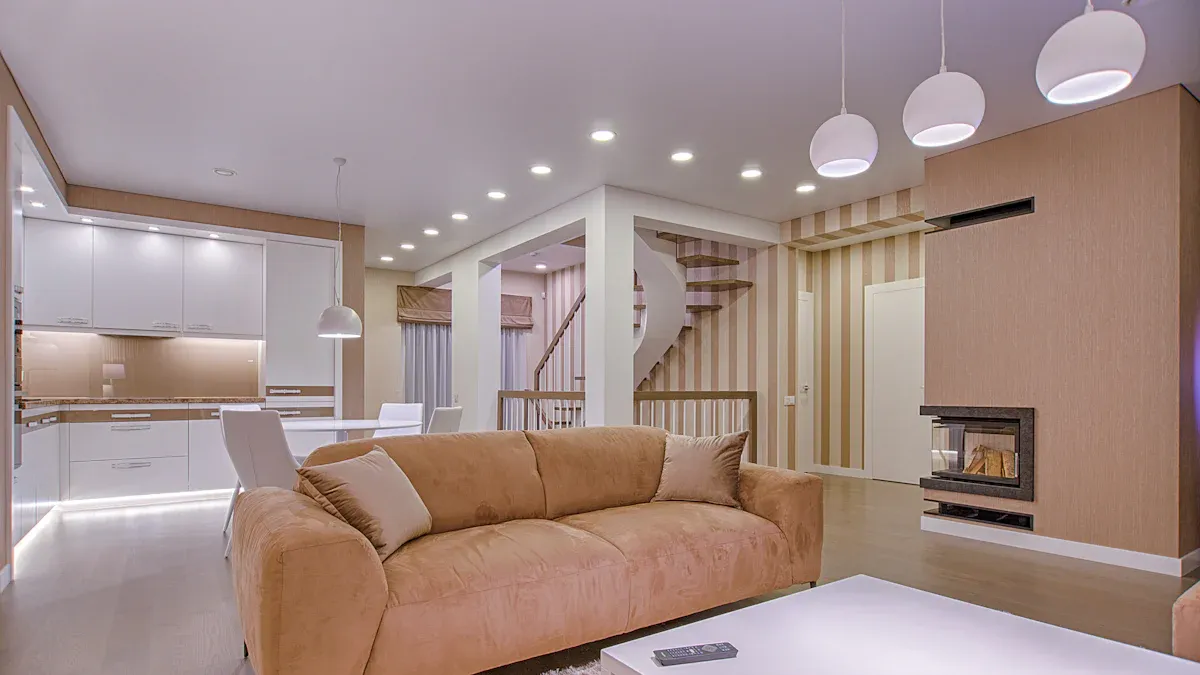
Before you pick out any LED Ceiling Light, you need to know your space. Every room is different, so a quick assessment helps you get the best results. Let’s break it down step by step.
Measure Room and Ceiling Size
Start with a tape measure. Measure the length and width of your room. Write down these numbers. Don’t forget the ceiling height. This information shapes your lighting plan.
- Measure the room’s length and width for accuracy.
- Check the ceiling height. Is it low, average, or high?
- Think about the room’s shape. Is it square, rectangular, or something else?
The size and shape of your room affect how light spreads. A small room with a low ceiling feels cozy. A large room with a high ceiling feels open and airy. Lower ceilings work well for focused tasks, while higher ceilings need more powerful lights to fill the space. If your ceiling is tall, you might need a larger or brighter LED Ceiling Light to reach every corner.
Tip: Write down your measurements. You’ll need them when you shop for lights.
Evaluate Light Spread and Quantity
Now, let’s figure out how many lights you need and where to put them. You want even light, not dark corners or harsh spots.
- Decide how you use the room. Is it for relaxing, working, or cooking?
- Look up the recommended brightness for your room type. For example:
- Living room: about 150-300 lux
- Kitchen: about 300-500 lux
- Office: about 400-600 lux
- Multiply the room’s area (length × width) by the recommended lux. This gives you the total lumens you need.
- Divide the total lumens by the output of one LED Ceiling Light. This tells you how many fixtures to install.
If your room gets lots of natural light, you might need fewer lights. If it’s dark or has odd corners, add more fixtures or choose brighter ones. The layout of your furniture also matters. Place lights so they cover the whole space, not just the center.
Note: The most common way to plan lighting is called the lumen method. It helps you match the light level to your needs.
A good plan means you won’t have shadows or glare. You’ll enjoy a bright, comfortable room that looks great any time of day.
LED Ceiling Light Specifications
Choosing the right LED Ceiling Light goes beyond just picking something that looks good. You want a light that fits your room’s size, purpose, and style. Let’s break down the key specs you need to know.
Brightness and Wattage
You might wonder, “How bright should my LED Ceiling Light be?” The answer depends on your room’s size and what you do there. Brightness is measured in lumens, not just watts. Lumens tell you how much light you get, while watts show how much energy the light uses.
Here’s a simple table to help you match the right brightness to your room:
You can also look at the recommended brightness for each room:
To figure out how many lights you need, multiply your room’s area by the recommended lumens per square meter. Then, divide by the lumens output of one LED Ceiling Light. This helps you avoid rooms that are too dim or too harsh.
Tip: Layer your lighting. Use your LED Ceiling Light for general brightness, but add lamps or wall lights for tasks or cozy corners.
Color Temperature and CRI
Color temperature changes the mood of your room. It’s measured in Kelvin (K). Lower numbers mean warmer, yellowish light. Higher numbers mean cooler, bluish light.
- For relaxing spaces like bedrooms and living rooms, pick a warm color temperature between 2700K and 3000K. This makes the room feel cozy and inviting.
- For kitchens or workspaces, choose a cooler color temperature between 3000K and 4000K. This helps you see clearly and stay focused.
Here’s a quick guide:
- 2700K – 3000K: Warm, soft light for relaxing.
- 3000K – 4000K: Neutral to cool light for working or cooking.
But there’s more to good lighting than just color temperature. You also want to check the Color Rendering Index (CRI). CRI measures how true colors look under the light. A high CRI (above 80) means your paint, furniture, and artwork will look vibrant and natural. A low CRI can make colors look dull or strange.
- High CRI lighting makes your home decor pop. Colors look vivid and true-to-life.
- Low CRI lighting can make everything look faded or off.
Compare a space lit with a 90+ CRI bulb to one with less than 60 CRI—colors will appear more vibrant, whites will be crisper, and everything will look just as it should.
When you shop for an LED Ceiling Light, check both the color temperature and CRI on the box or product page. This way, you get the right mood and make sure your room looks its best.
Style and Fixture Selection
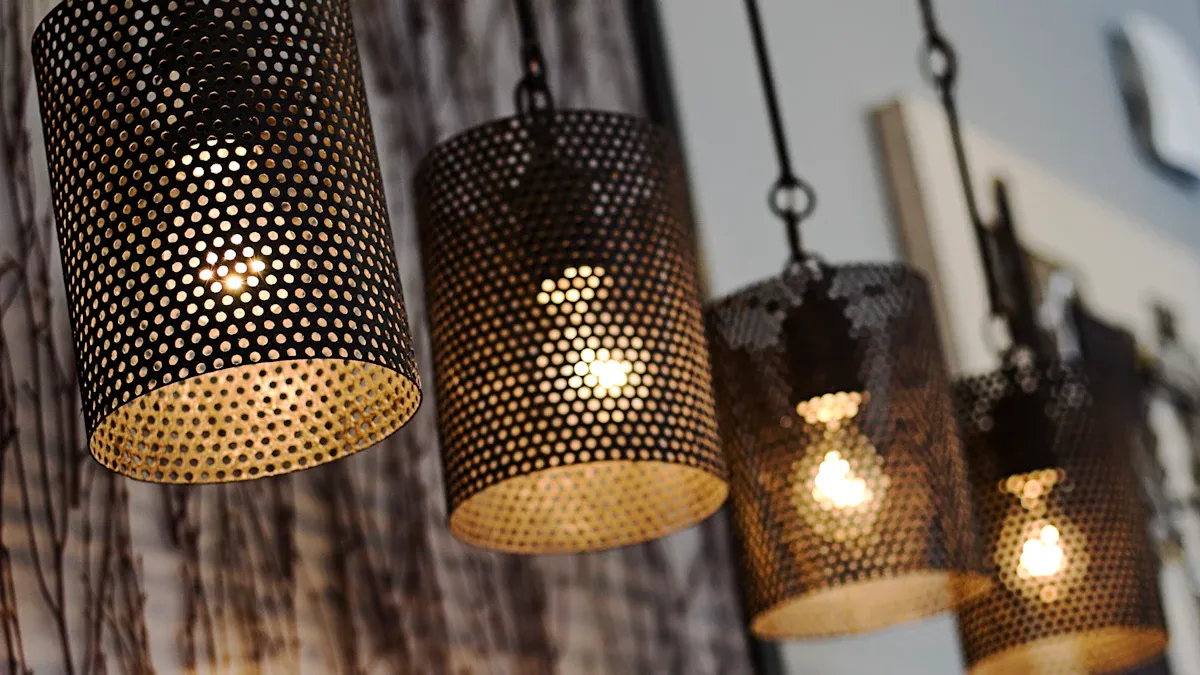
Match Home Decor
You want your lighting to look as good as it works. Modern homes use a mix of styles, so you have plenty of options. Think about the vibe you want. Do you like things sleek and simple, or do you want something bold? Here are some popular styles you might see in today’s homes:
- Flush mounts sit close to the ceiling and keep things neat.
- Semi-flush mounts add a bit of flair but still feel practical.
- Track lighting lets you point light where you need it and gives a modern touch.
- Chandeliers make a statement and work well in dining or living rooms.
- Recessed lighting keeps the ceiling clean and spreads light evenly.
Designers often match fixtures to the room’s theme.
Fixture Size and Type
Getting the right size matters. Too big, and the light takes over the room. Too small, and it gets lost. Here’s how you can pick the best fit:
- Measure your room’s length and width.
- Check your ceiling height.
- Use the rule of thumb: the fixture’s diameter should match the room’s size.
- Think about the room’s purpose. Kitchens need more light than bedrooms.
- Make sure the fixture fits the space and matches your style.
Prevent Glare and Ensure Even Light
No one likes harsh light in their eyes. You can avoid glare and get smooth, even light by looking for these features:
- Anti-glare designs help keep your eyes comfortable.
- The right trim spreads light across the room.
- Beam angles direct light where you want it.
- Accessories like honeycomb grids or shielding blades control the light’s direction.
Tip: Choose fixtures with diffused glass or deep-set bulbs to soften the light and make your space feel calm.
Efficiency, Smart Features, and Installation
Energy Ratings and Lifespan
When you shop for new ceiling lights, look for energy efficiency labels. These ratings help you save money and protect the environment. Here’s a quick guide:
LEDs use up to 90% less energy than old bulbs. They also last much longer. While an incandescent bulb might last 1,000 hours, a high-quality LED can shine for 20,000 to 50,000 hours. That means you change bulbs less often and spend less on replacements.
Tip: LEDs have a smaller carbon footprint and create less waste, making them a smart choice for your home and the planet.
Smart Controls and Adjustability
Modern ceiling lights come packed with smart features. You can control them with your voice, phone, or even set them to turn on and off by themselves. Check out some popular options:
You can also dim the lights or change their direction. This lets you create the perfect mood for any activity. Adjustable lights help you focus on homework, relax with a movie, or brighten up a party. In open spaces, you can make different zones for dining, reading, or playing games—all with the same fixture.
Note: Human-centric lighting is a new trend. It mimics natural daylight, helping you feel more awake during the day and relaxed at night.
Installation and Maintenance
Installing new ceiling lights is easier than you might think, but safety comes first. Always turn off the power before you start. Here are some steps to follow:
- Turn off the main power supply.
- Wear insulated gloves and use safe tools.
- Secure the mounting plate to the ceiling.
- Connect the wires as shown in the instructions.
- Attach the fixture and check all connections.
LEDs need less maintenance than other lights. Clean them every few months and check the connections. Because they last so long, you won’t need to replace them often. This saves you time and money.
Remember: Use high-quality wiring and avoid overloading circuits for the best results.
You can make your home shine with the right lighting plan. Start by measuring each room and thinking about how you use the space. Choose lights that fit your style and give you the brightness you need. Remember these steps:
- Match the wattage and number of fixtures to your room size.
- Pick color temperatures that fit each room’s mood.
- Select designs that match your decor and personal taste.
- Look for energy-saving features and smart controls.
With a little planning, you can create a space that feels bright, comfortable, and truly yours.
FAQ
How do I know if an LED ceiling light is bright enough?
Check the lumens on the box. More lumens mean more light. For a bedroom, you want at least 1,500 lumens. For a kitchen, go higher. If you’re unsure, ask the store staff.
Can I install LED ceiling lights by myself?
You can install many LED ceiling lights if you follow the instructions. Always turn off the power first. If you feel unsure, call a licensed electrician. Safety comes first.
What color temperature works best for bedrooms?
Pick a warm color temperature, like 2700K or 3000K. This light feels soft and cozy. It helps you relax and get ready for sleep.
Do LED ceiling lights save money?
Yes! LED lights use less energy and last longer than old bulbs. You pay less on your electric bill. You also change bulbs less often.


